Transformational public housing guide wins top Innovation award
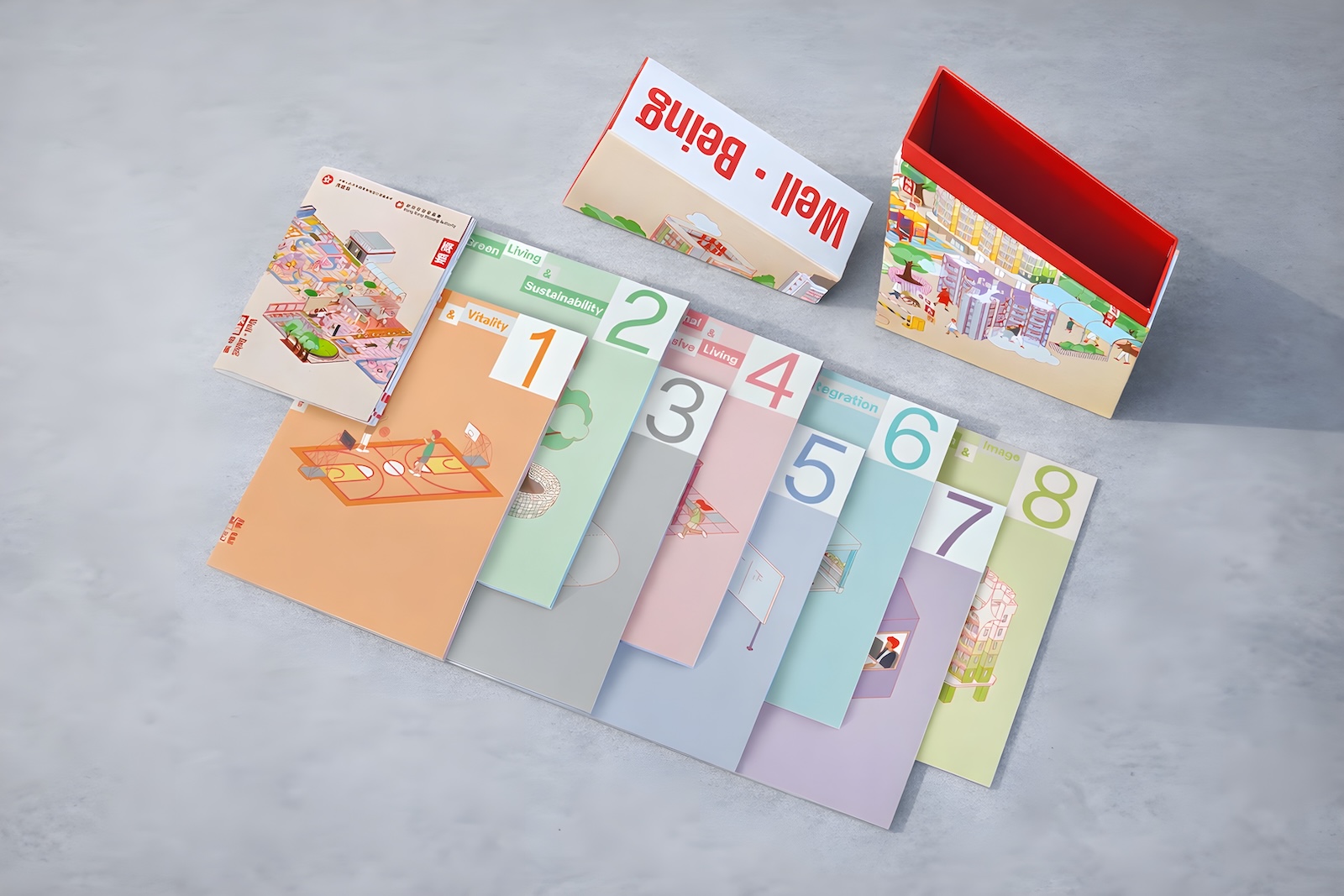
A ground-breaking design guide championing a human-centric approach to reimagining public housing as friendly, healthy, community-oriented spaces has won the Gold Award for Innovation – Residential in the A&D Awards 2025.
Launched last year by the Hong Kong Housing Authority and Housing Bureau, with the support of local practice Architecture Commons, it’s already having an impact on estates across the territory.
Architecture Commons co-founder Eric Ho describes the award as “deeply gratifying” and a validation of the collective efforts of his team, the bureau, the authority and supporting research institutes.
“More importantly, it underscores the critical importance of well-being design in residential living. We view this design guide not merely as an endpoint, but as a foundation for creating more well-being-focused communities throughout Hong Kong,” he says.
In essence, the guide details practical ways that architects and designers can employ a range of wellness design concepts in both existing and new estates in Hong Kong.
One estate that has already benefited from the guide is the Ping Shek Estate in Kwun Tong, where the team created a “Kung Fu Court” – an innovative wellness and recreation space that provides residents with a unique exercise experience while celebrating Chinese martial arts culture within the community.
The court (below right) features customised exercise facilities designed to accommodate residents of varying ages and abilities, surrounded by verdant landscaping complemented by walking paths that make physical activity more enjoyable.
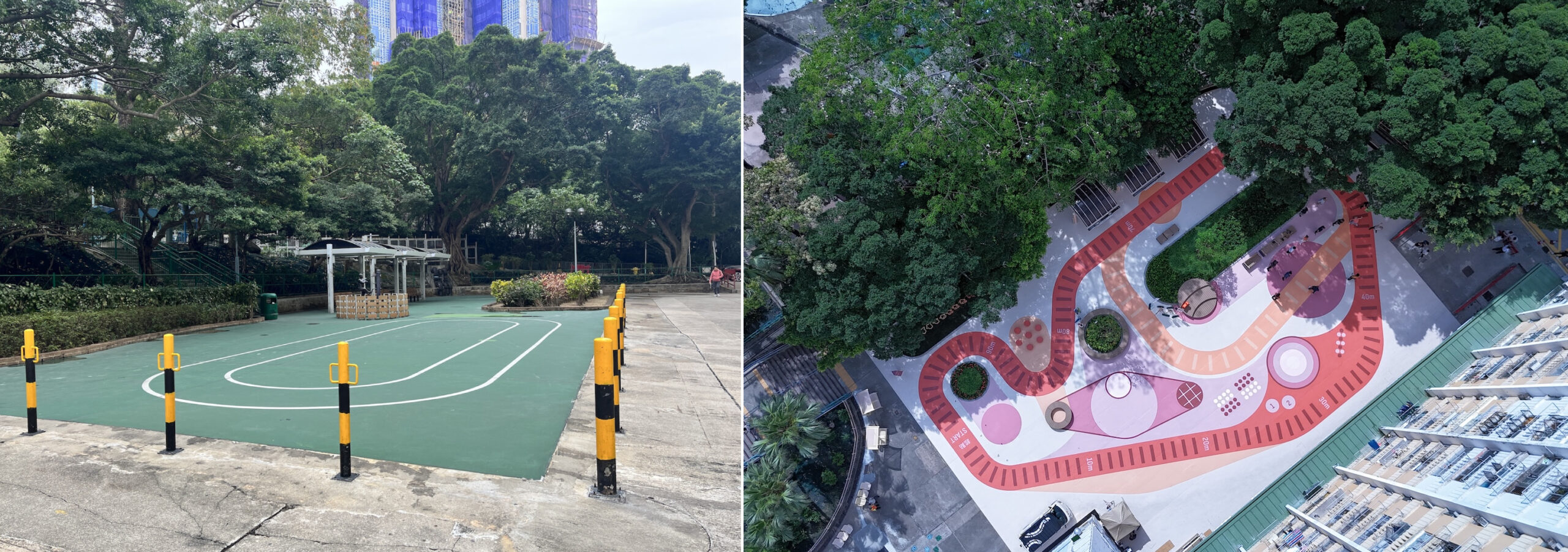
The estate public space before (left) and after (right) the Kung Fu Court is installed
Ho explains they also created a “Wellness Corner” by optimising a ground-floor lobby to create a welcoming social space.
“It now features inclusive seating that encourages neighbourly interaction, thoughtful details, such as a notice board for timely community information, and practical amenities, like hooks near mailboxes, that address residents’ everyday needs,” he says.
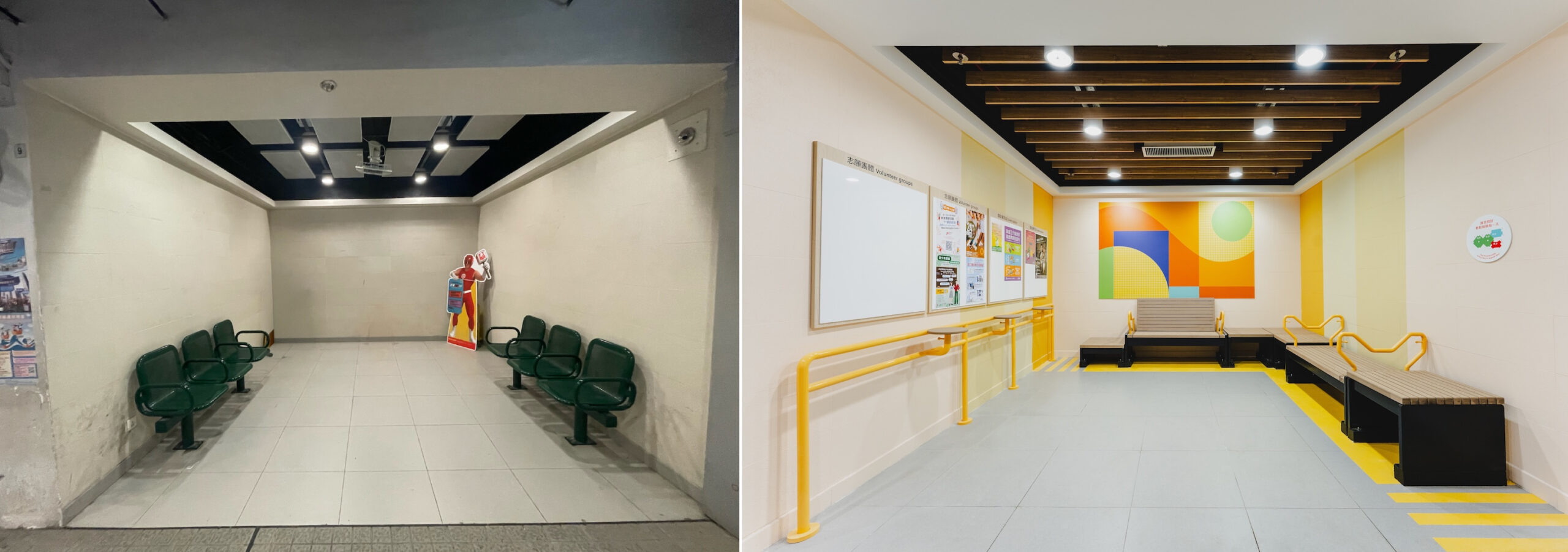
The estate public space before (left) and after (right) the Wellness Corner was created
Pressed to highlight one element of the guide that he’s most proud of, Ho nominates the Universal Service Bay (USB), a concept that emerged from design thinking workshops with industry professionals and Housing Authority colleagues.
“It brings diverse social services directly into public housing estates, creating dedicated spaces where residents can conveniently access health and social services within their own community,” he says.
“This mobile service hub fosters community development and responds to residents’ evolving needs. Essentially, it opens up new possibilities—physical space no longer limits the range of services available, and residents can access services that adapt to their changing demographics and requirements.”
Housing Authority Chief Architect Tim Li says that since its launch, the guide has been adopted across both existing and new estates, including projects under development in the Northern Metropolis and major redevelopment projects such as Choi Hung and Wah Fu.
He says that with new estates, there is an emphasis on broadening the approach towards cultivating comprehensive well-being communities.
According to Li, the Hin Fat Estate in Tuen Mun, the first well-being estate to welcome residents in 2024, exemplifies this vision. “It features various well-being amenities, including a Universal Service Bay, Wellness Corner, and a community farm,” he says.
“Age-friendly design elements such as graphical signage, double handrails, and social seating enhance everyday living. Ceramic artworks and displays highlighting historic Tuen Mun pottery strengthen residents’ connection to local history, while a graded heritage dragon kiln underscores the area’s cultural identity.”
He says that witnessing these well-being design elements come to life has been truly rewarding. “Most meaningful, however, was meeting residents at community events after the move-in to the first well-being estate and witnessing their genuine satisfaction as they shared positive experiences in their new homes.”