A&D Awards 2025 Practice of The Year: Aedas
Aedas Hong Kong was recently awarded ‘Practice of The Year’ in the A&D Awards 2025 winning 10 Awards. Perspective spoke with Aedas Founder and Chairman Keith Griffiths.
Prospective: This was an outstanding performance in the A&D Awards, can you tell us what this mens to Aedas?
It is a deep honour for Aedas to be named Practice of the Year at the A&D Awards 2025. This recognition reflects the creativity, commitment, and passion that our teams bring to every project. It celebrates not only the architecture we design, but also the principles that drive our work — our commitment to design excellence, continuous innovation, and creating environments that enrich the lives of the communities we serve.
The ‘secret’ to our success lies in our approach. At Aedas, we believe that meaningful design begins with a profound understanding of the social and cultural contexts that shape each place. This community centric approach shapes the way we work and pushes us to design with purpose —to deliver architecture that is both meaningful and impactful.
Perspective: Hong Kong is unique market with high density population and dramatic landscape. To what extent does this effect Aedas’s projects?
Hong Kong’s high density urban condition and dramatic natural landscape have shaped the way the city has evolved for decades. At Aedas, we are deeply familiar with these conditions and have extensive experience in designing high rise developments within similarly complex contexts. 40 years of practice in Hong Kong, Mainland China and Southeast Asia has also allowed us to transfer this expertise to other regions, including the Middle East.
Each project responds to its specific context, allowing us to highlight its unique character while stitching together different urban layers to create permeable, integrated and flexible hubs at the heart of the city. Beyond vertical connectivity, we introduce public spaces and greenery across multiple levels including podiums, rooftops and terraces. Efficient multi-level pedestrian space creates permeable, integrated, flexible and focused hubs.
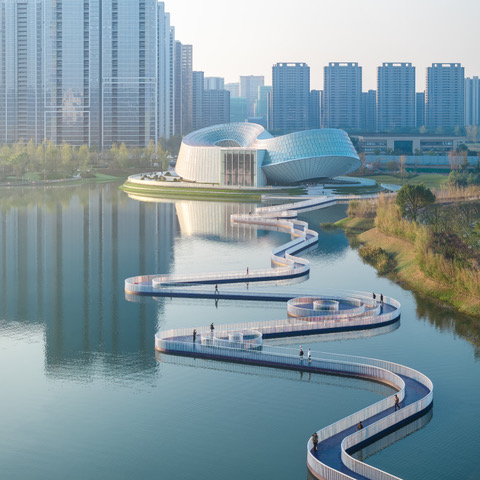
Yohoo Museum – A contemporary cultural landmark blending art, architecture, community and outdoor experience.
Perspective: In recent years there has also been significant changes in the structure of Hong Kong. Family sizes tend to be smaller, requirements are different, working practices have changed. Has the greatly affected the way you approach residential and commercial projects?
In the post‑Covid era, the design of residential, office and retail projects has increasingly focused on flexibility and adaptability. Changing lifestyles and working patterns mean that spaces must now support a broader range of activities over time.
For residential design, we recognise that people are spending more time at home, with home‑based and hybrid working becoming more common. This has led to a greater emphasis on flexible layouts that can comfortably accommodate living, working and relaxation within the same environment.
In office developments, the focus has shifted away from purely desk‑based workplaces towards more communal and collaborative spaces. Contemporary retail design goes beyond simply providing spaces for buying and selling to create immersive and experiential environments for people to socialise and interact.
We are seeing global changes in weather, concerns over pollution, a greater awareness of achieving sustainability. To what extent can you achieve progress to address such concerns and are there financial barriers to achieving progress?
We design resilient buildings that are able to accommodate different uses as demands change. Flexible layouts allow to reduce the need for demolition and redevelopment. By preserving the existing structures and frames, we can minimise embodied carbon while upgrading the building and retaining the human value already invested. Integration of smart and energy-efficient systems reduce energy consumption and enable future sustainable measures to be incorporated without extensive structural intervention.
While sustainable measures often require upfront investment in research and implementation, they deliver substantial long-term value. Energy-efficient systems and reduced demolition costs not only lower ongoing expenses but also offer enduring financial benefits over time. Our goal is to create adaptable, multifunctional environments that maximise synergy and urban vitality. By layering uses and encouraging interaction between programmes, architecture can support more sustainable patterns of living and working while contributing positively to the public realm.
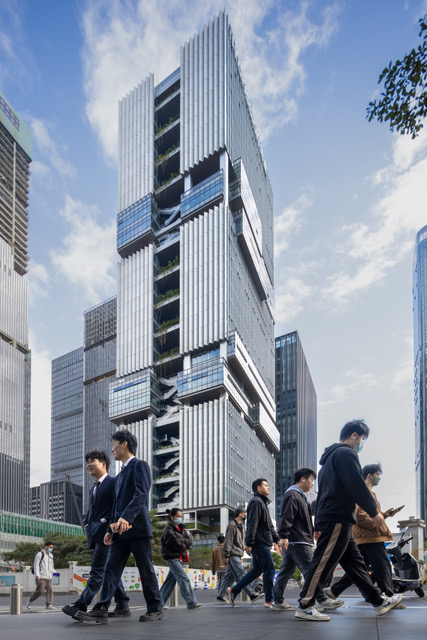
Shenzhen T33 Tower – A sustainable office tower redefining modern workplace through greenery and connected communal spaces.
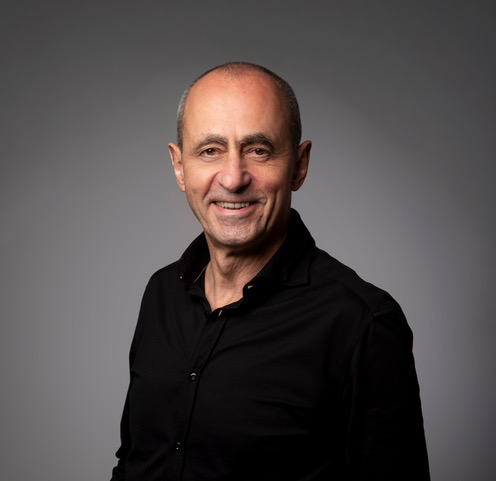
Keith Griffiths
Keith Griffiths is the Founder and Chairman of Aedas, and an internationally acclaimed architect and master planner with over 48 years of experience. He is particularly known of large-scale urban planning and high-rise, high-density developments. He leads Aedas’ global portfolio of landmark residential, commercial, retail, and mixed-use projects across Asia, Europe, the Americas, and the Middle East.
A visionary behind the iconic skyline of Hong Kong and numerous transformative developments across Asia, Keith is widely recognised for his ability to shape cities through innovative and contextually responsive design. He is a passionate advocate for sustainable architecture, championing socially and culturally grounded solutions that enhance the urban experience.